RF Fundamentals
Understanding the fundamentals of Radio Frequency and electromagnetic waves
Learning Objectives
By the end of this lesson, you will understand:
- How radio waves are generated and transmitted
- The key properties of RF waves: frequency, wavelength, amplitude, and phase
- The relationship between RF waves and the electromagnetic spectrum
- How RF waves propagate in real-world environments
What are Radio Waves?
A radio wave starts as an alternating current (AC) generated by a transmitter. This electrical signal is then sent through a copper conductor and radiated out as an electromagnetic wave.
If you could visualize an AC current, it would look like a sine wave oscillating above and below a center line. Similarly, if you could see RF waves, they would appear as these same wave patterns propagating through space.
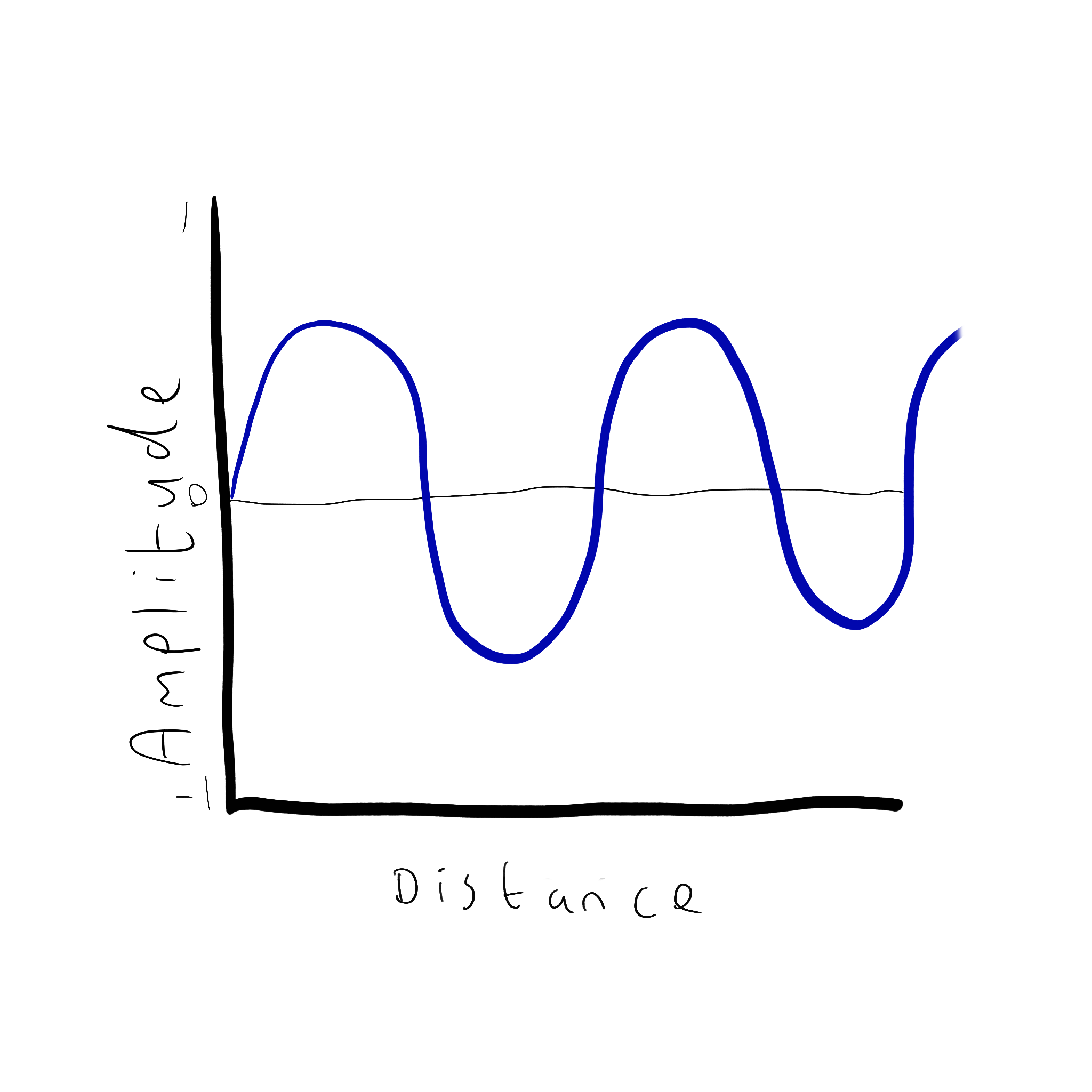
Visual representation of RF wave patterns
Think about this: Right now, countless RF waves surround you - from broadcast radio stations, your WiFi router, cell phone towers, Bluetooth devices, and more. All of these invisible waves coexist in the air around us!

Invisible RF waves from various sources coexisting around us
Key RF Wave Properties
The characteristics of RF waves are determined by four fundamental variables:
Frequency (Click to explore)
How many wave cycles occur per second, measured in Hertz (Hz). Higher frequency = more cycles per second.
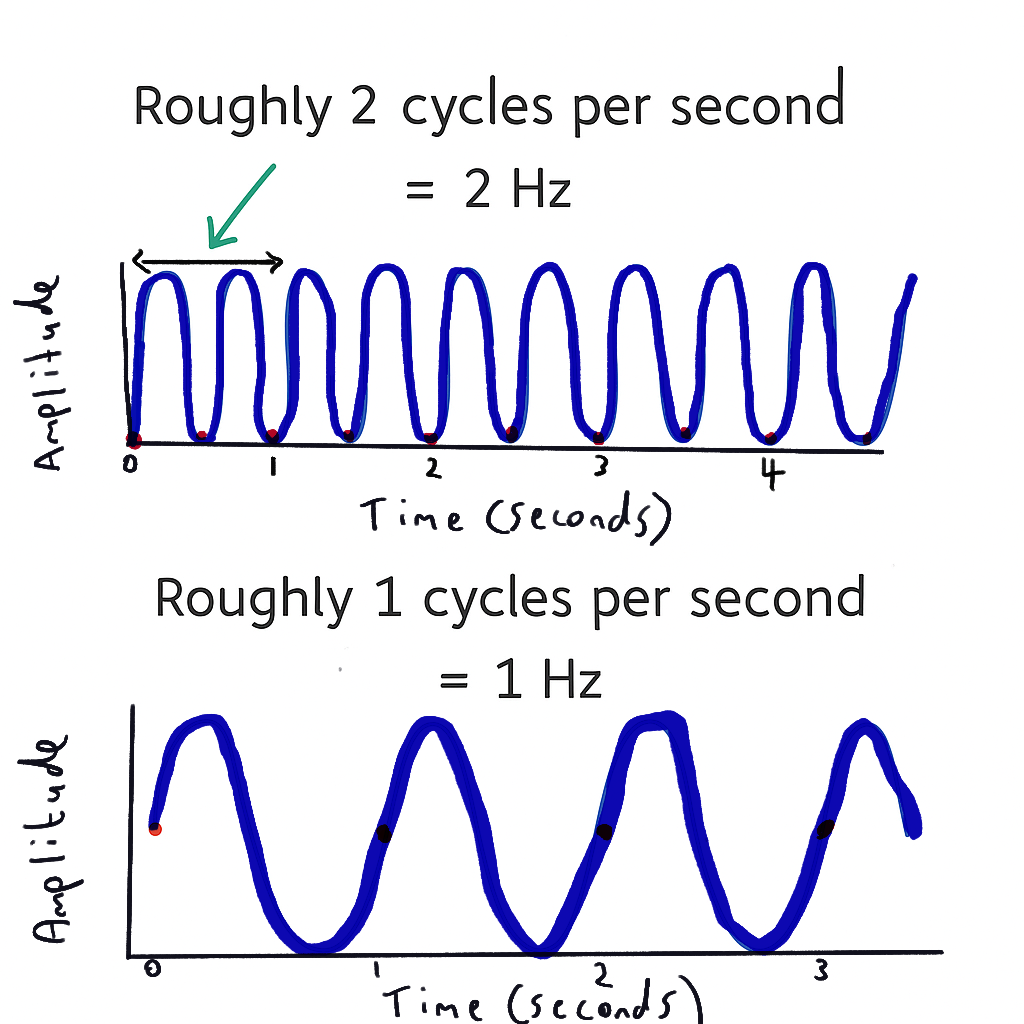
Click to learn more
Wavelength (Click to explore)
The physical distance between two identical points on consecutive waves. Inversely related to frequency.
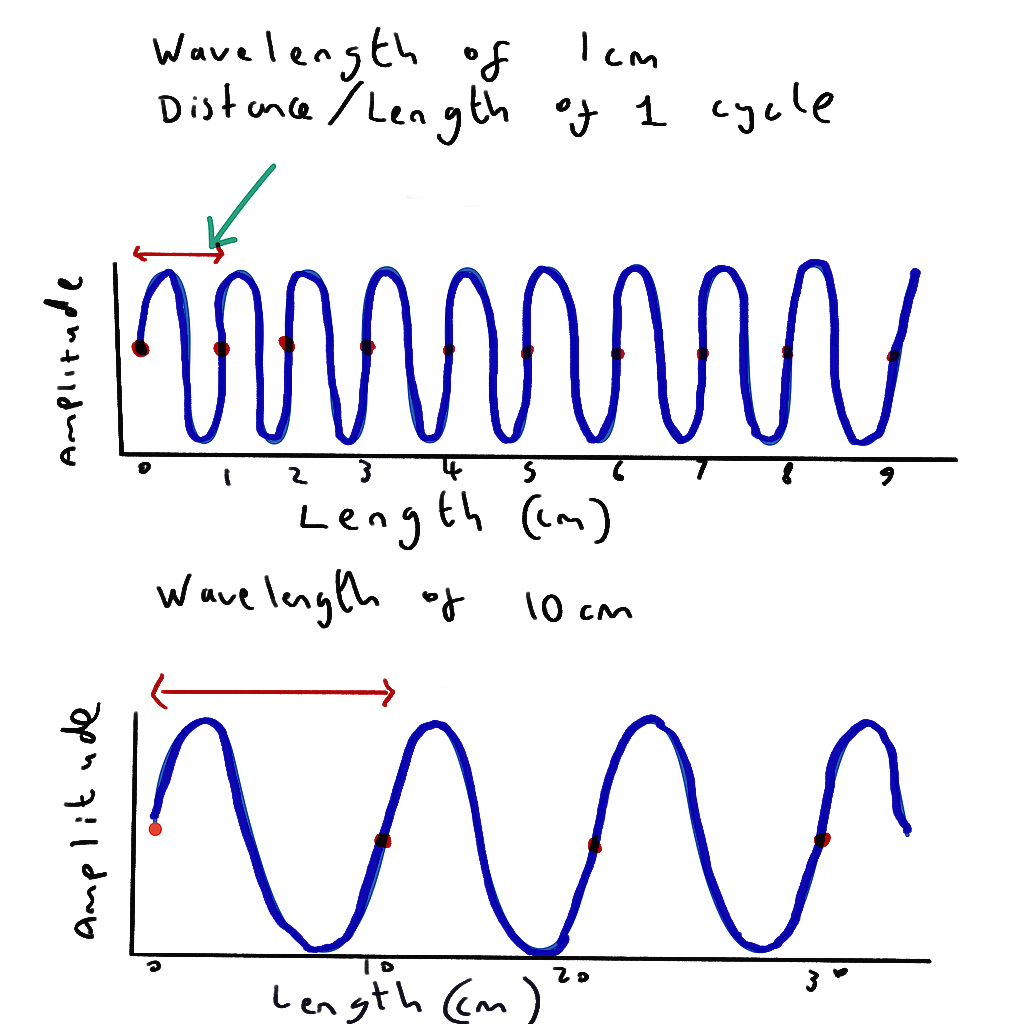
Click to learn more
Amplitude (Click to explore)
The height of the wave, which determines the power/strength of the signal. Higher amplitude = stronger signal.
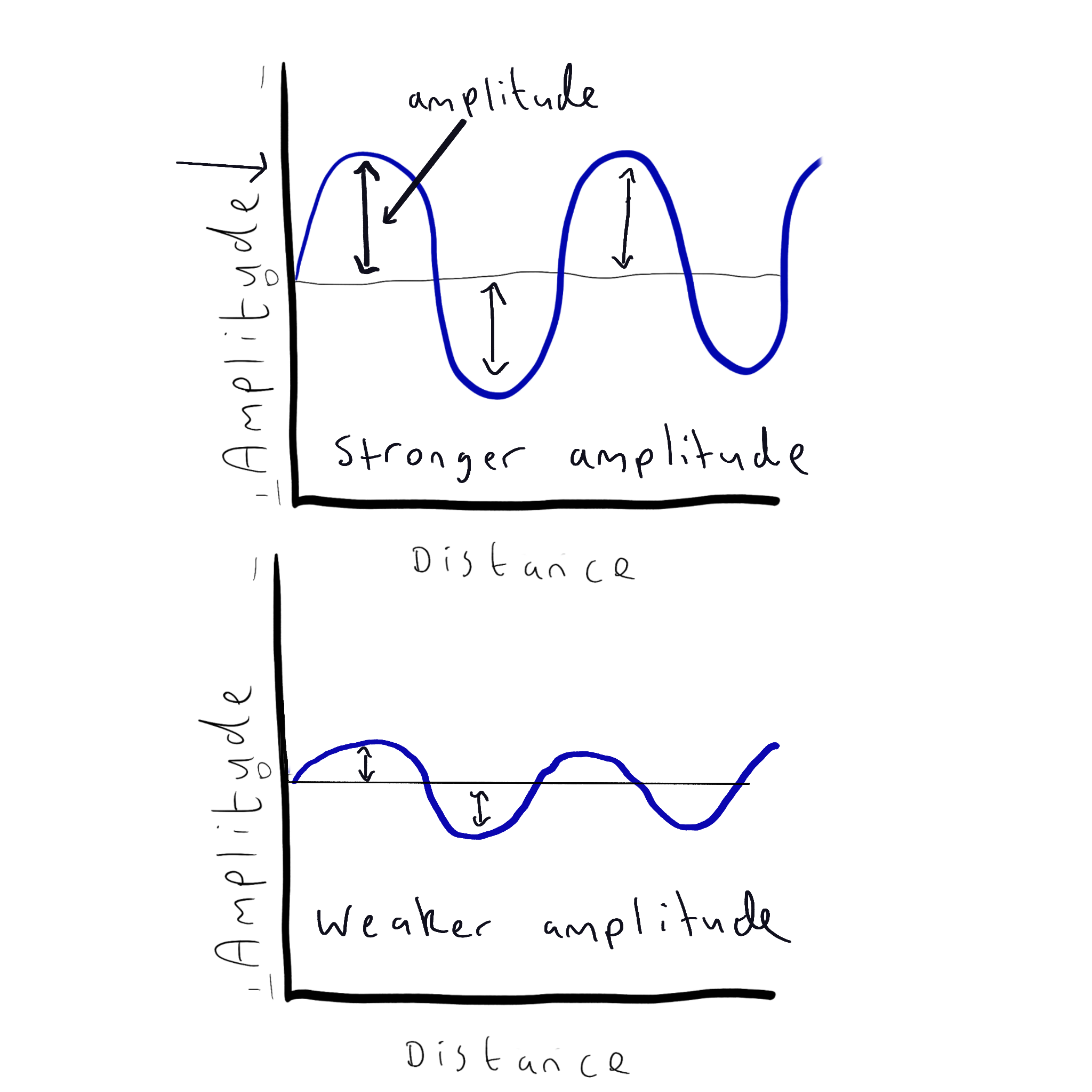
Click to learn more
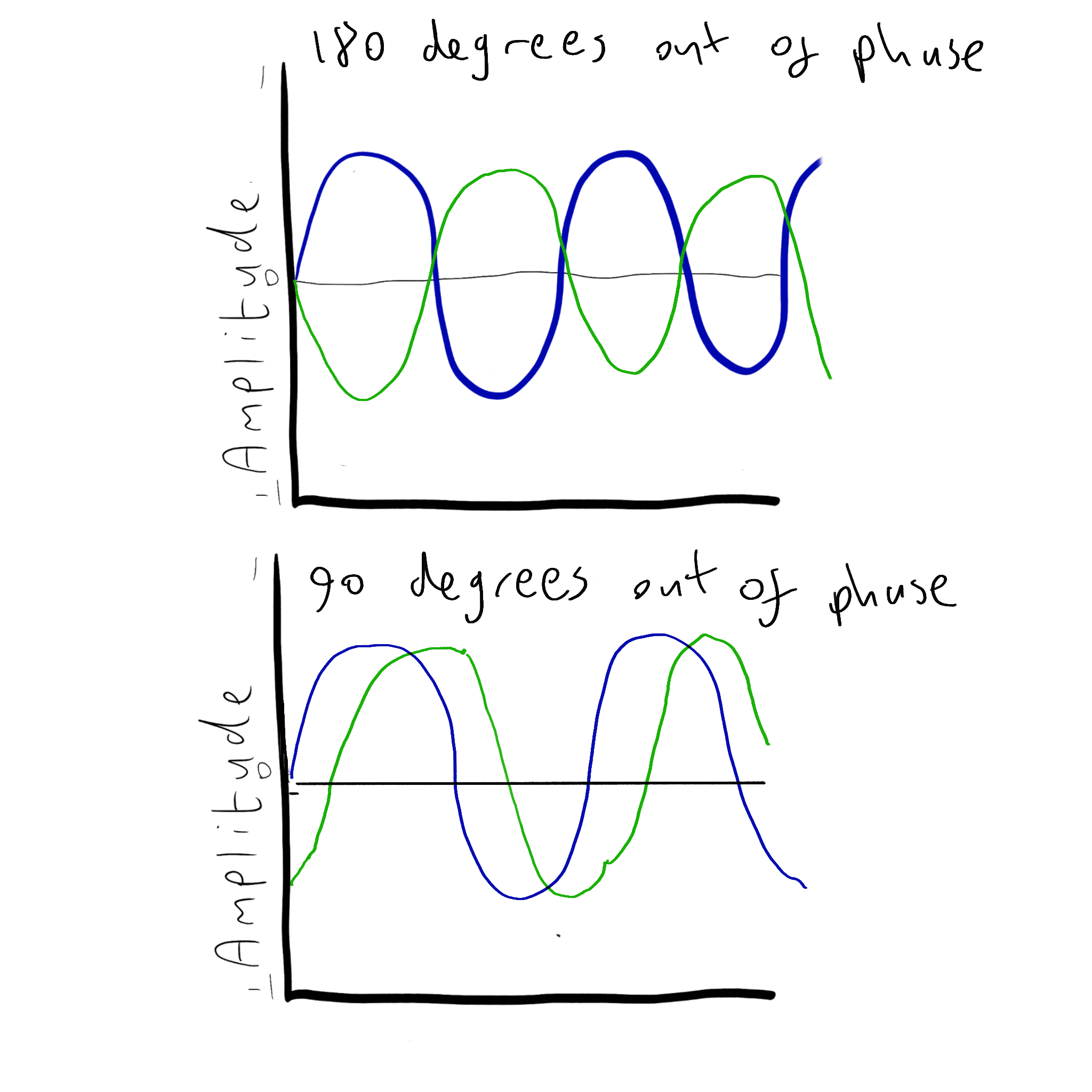
Phase (Click to explore)
The timing relationship between waves. Critical for signal processing and antenna diversity systems.
Click to learn more
Speed of RF Waves
299,792,458 meters per second
(≈ 300 million meters per second)
In a vacuum: RF waves travel at the speed of light - approximately 300 million meters per second. This is the theoretical maximum speed.
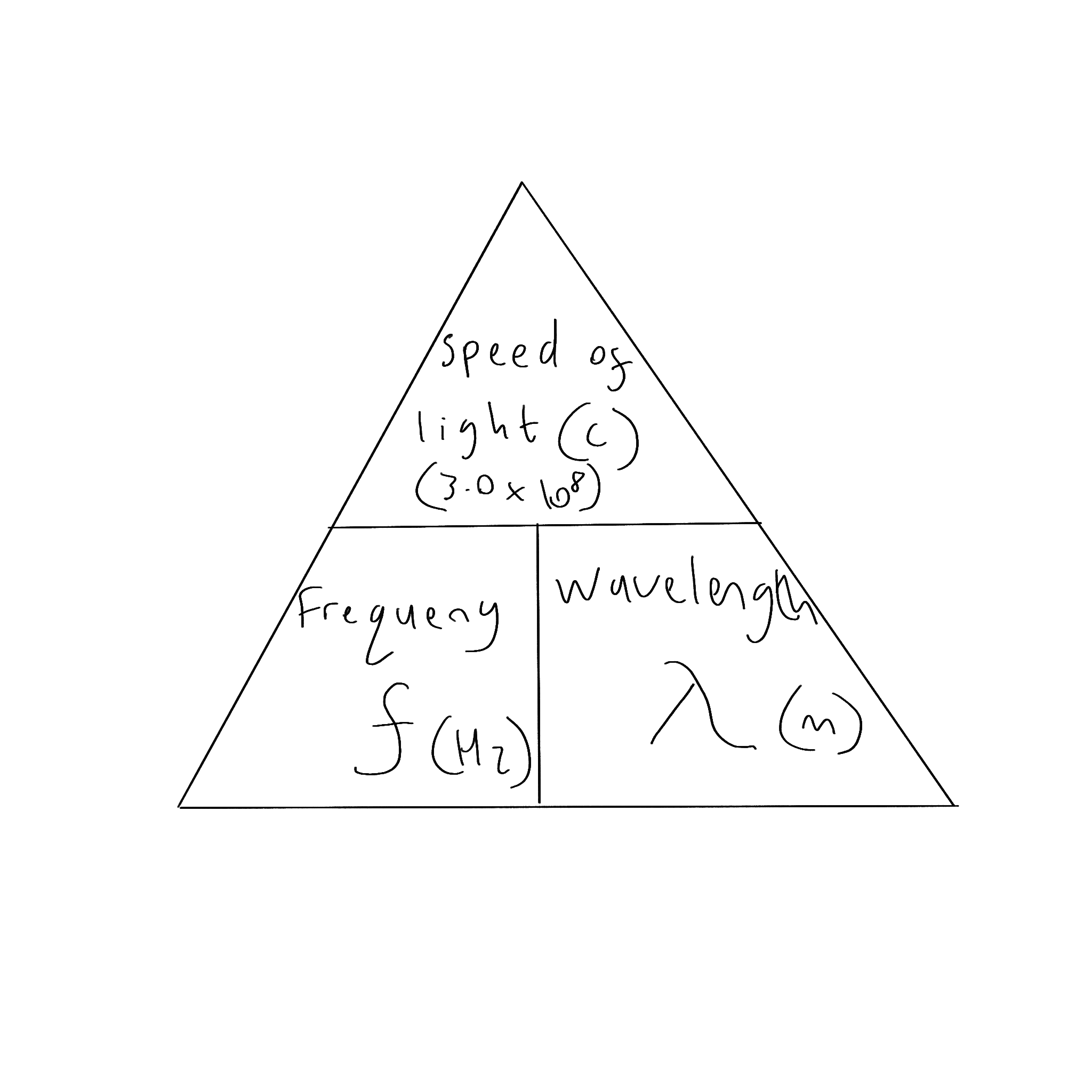
The fundamental RF triangle showing the relationship between Speed (c), Frequency (f), and Wavelength (λ)
The RF Formula Triangle
This triangle shows the three fundamental relationships in RF calculations:
c = λ × fCalculate speed when you know wavelength and frequency
f = c ÷ λCalculate frequency when you know speed and wavelength
λ = c ÷ fCalculate wavelength when you know speed and frequency
Practice Examples
Given: c = 300,000,000 m/s
Using: λ = c ÷ f
λ = 300,000,000 ÷ 2,400,000,000
λ = 0.125 meters = 12.5 cm
Given: c = 300,000,000 m/s
Using: f = c ÷ λ
f = 300,000,000 ÷ 0.06
f = 5,000,000,000 Hz = 5 GHz
Key Insight: This triangle relationship is fundamental to understanding all RF behavior. When any one variable changes, it directly affects the others. This is why higher frequency WiFi (5/6 GHz) has shorter wavelengths than 2.4 GHz!
- Obstructions: Buildings, trees, terrain
- Interference: Other RF sources
- Environmental factors: Weather, humidity, atmospheric conditions
- Medium: Air density, materials the wave passes through
Interactive Wave Explorer
Experience how frequency, wavelength, amplitude, and phase affect RF waves in real-time with this interactive visualization:Made by : Szilágyi, András (2019): "EMANIM: Interactive visualization of electromagnetic waves". Web application available at URL https://emanim.szialab.org
Interactive tool by SziaLab - Adjust the controls to see how wave properties change
Open in new tab
Experiment with Wavelength
- Shorter wavelength → Higher frequency
- Longer wavelength → Lower frequency
- See the inverse relationship in action!
Adjust Amplitude
- Higher amplitude → Taller waves (stronger signal)
- Lower amplitude → Shorter waves (weaker signal)
- Frequency stays the same!
Play with Phase
- Phase shift → Wave timing changes
- Compare multiple waves with different phases
- See constructive/destructive interference!
Connection to WiFi Technology
What you're seeing in this visualization directly applies to WiFi:
- 2.4 GHz WiFi: 2.4 billion cycles per second (like setting frequency to 2,400,000,000 Hz)
- Signal Strength: Amplitude changes represent your WiFi signal bars going up and down
- MIMO Systems: Phase differences help separate multiple data streams
- Interference: When waves don't align properly, you get the destructive patterns you can create here
The Electromagnetic Spectrum
The electromagnetic spectrum includes:
- Radio Waves: Lowest frequency, longest wavelength (AM/FM radio, WiFi, cellular)
- Microwaves: Higher frequency (satellite communication, radar)
- Infrared: Heat radiation
- Visible Light: What our eyes can detect
- Ultraviolet, X-rays, Gamma rays: Very high frequency, very short wavelength
All of these are fundamentally the same type of electromagnetic energy - they just operate at different frequencies and wavelengths!
Quick Knowledge Check
Test your understanding of RF fundamentals with these key questions.
Question 1: What is the wavelength of 2.4 GHz WiFi?
A) 25 cm
B) 12.5 cm
C) 6 cm
Question 2: At 2.4 GHz, how many wave cycles occur every second?
A) 2.4 million cycles
B) 24 million cycles
C) 2.4 billion cycles
Question 3: Which WiFi frequency has the shortest wavelength?
A) 2.4 GHz (12.5 cm)
B) 5 GHz (6 cm)
C) 6 GHz (5 cm)
Next in CCNP Wireless 350-101
Continue your RF learning journey
1.1 Free Space Path Loss (FSPL)
Learn how RF signals lose strength over distance, even in perfect conditions. Understanding FSPL formula and real-world applications.
Start Lesson1.2a Signal Strength
Understanding power levels, dBm, RSSI, and signal strength measurements in wireless networks.
Coming SoonProfessional RF Engineering & WiFi Design
Understanding RF fundamentals is the foundation of professional wireless network design. At Sprintwave, we apply these principles daily to deliver enterprise-grade WiFi solutions across Norfolk and East Anglia.
RF Site Survey & Design
- Professional RF Analysis - Using spectrum analyzers and predictive modeling
- Frequency Planning - Optimal 2.4GHz, 5GHz, and WiFi 6E channel design
- Wavelength-Based Antenna Placement - Applying RF fundamentals for maximum coverage
- Power Level Optimization - Balancing coverage, capacity, and interference
Large Property WiFi
- Multi-Building Coverage - Manor houses, estates, and commercial sites
- RF Propagation Modeling - Predicting signal behavior across complex environments
- Point-to-Point Links - Building interconnection using RF principles
- Seamless Roaming Design - Enterprise-grade mobility solutions
RF Analysis
Spectrum analysis, interference hunting, and RF optimization using professional test equipment
Antenna Design
Custom antenna solutions based on wavelength calculations and propagation requirements
Performance Tuning
MIMO optimization, beamforming, and advanced RF techniques for maximum throughput
Need Professional RF Design Services?
From basic RF analysis to complex multi-building wireless networks, we apply CCNP-level RF knowledge to every project. Get expert wireless design from certified engineers.
Serving Norfolk, Suffolk, Cambridge & East Anglia